
 2 years ago
1
2 years ago
1
ARTICLE AD BOX
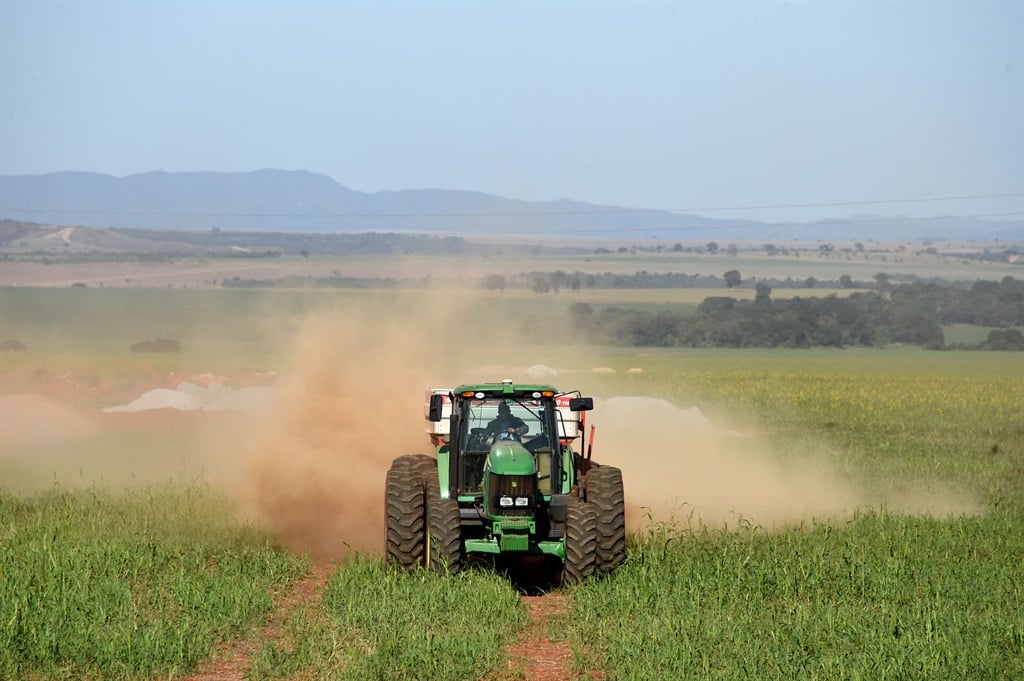
As fertiliser supplies from Russia are disrupted, nine African countries will benefit from the African Development Bank's (AfDB) African Fertiliser Financing Mechanism (AFFM).
- Africa faces a shortage of about 30 million metric tons of food amid Russia's war on Ukraine.
- Nine African countries will benefit this year from the African Development Bank's African Fertiliser Financing Mechanism.
- Fertiliser supply from Russia remains uncertain due to the war.
Nine African countries will benefit from the African Development Bank's (AfDB) African Fertiliser Financing Mechanism (AFFM) this year as fertiliser supply from Russia remains uncertain amid its war on Ukraine.
The funding initiative is anchored on the AfDB's African Emergency Food Production Facility, which was launched last year due to the war's disruption of food supplies.
Africa now faces a shortage of at least 30 million metric tonnes of food, especially wheat, maize, and soybeans, imported from both countries.
The beneficiaries this year are Zimbabwe, Côte d'Ivoire, Ghana, Tanzania, Uganda, Mozambique, Kenya, Senegal and Zambia.
The main beneficiaries in these countries will be smallholder farmers, while country suppliers will have access to capital.
Romaric Ollo Hein from the AfDB's communication and external relations department said: "The board of directors also validated the AFFM's 2023 programme of activities: strengthening the fertiliser sector through access to finance, supporting the development of sustainable policy reforms to improve fertiliser production, trade and use, and facilitating access to inputs and technical assistance for smallholder farmers."
READ | Africa banking on extension of grain export initiative from Ukraine and Russia
In the case of Tanzania, Uganda, Mozambique and Kenya, the AfDB will avail "credit guarantee schemes totalling US$9.7 million (about R187 million)".
Zimbabwe will receive about R82 million (US$4.3 million), and Côte d'Ivoire and Ghana will receive about R38 million (US$2 million) each.
Senegal and Zambia will benefit if "the United States Agency for International Development (USAID) follows through on its US$15 million commitment to the AFFM".
Want to discuss hotly debated topics with someone from across the world? Sign up for our global dialogue programme and get matched for a conversation
Through loan guarantee projects, capacity building for farmers and input distributors and other initiatives, the AFFM plans to make it easier for smallholder farmers to obtain inputs and extension services, as well as ensure adequate fertiliser application, boost agricultural output, and enhance soil quality.
Commenting on measures launched in 2021 to enhance fertiliser production, trade, and use, the AFFM said it would continue to collaborate with the International Fertiliser Development Centre and the Alliance for a Green Revolution in Africa.
The policy on fertiliser in at least 10 African nations will also be thoroughly examined, with a map of the current status, the identification of gaps, and the preparation of an action plan.
The News24 Africa Desk is supported by the Hanns Seidel Foundation. The stories produced through the Africa Desk and the opinions and statements that may be contained herein do not reflect those of the Hanns Seidel Foundation.






 English (US)