
 2 years ago
1
2 years ago
1
ARTICLE AD BOX
The South African Postbank has published its annual performance plan for the 2023/24 financial year, outlining its plans to become a fully-fledged state-owned bank.
According to Postbank, its fundamental goal is to provide simple and affordable financial services to communities catering for traditional retail banking as well as for SMEs and the public sector.
However, to achieve this, the group needs to secure a banking licence – an application for which is still to be submitted to the South African Reserve Bank (SARB).
Postbank said it aims to submit this application before the end of December 2023, anticipating that it will be granted sometime in the 2024/25 financial year.
In the meantime, it will continue developing and expanding its service offerings – and will completely overhaul its positioning in the market.
The group believes that it can play a pivotal and transformational role in the local banking space, and has a value proposition suited for the market segments that are not served or are under-served by the other local banking groups.
The South African Postbank Company was established in April 2017 and was gazetted to take over the Postbank business from the South African Post Office, effective on 1 April 2019.
As part of its transition to a traditional registered retail bank away from being a state-owned saving bank – a Bank Controlling company has been established and incorporated in terms of the new Postbank Act.
When the new Act comes into law, Postbank will start the process of resubmitting and finalising its section 16 application to become a registered state-owned bank.
Postbank is currently exempted from the provisions of the Banks Act and is regarded as a deposit-taking institution. As it stands, it only offers transactional savings accounts, but with a banking licence it will be able to transform into a full retail bank.
Ultimately, the bank wishes to provide the following five products:
- Transactional accounts
- Credit facilities
- Insurance products
- Saving products
- Remittance services
In its annual performance plan, Postbank acknowledged that it will be entering an already highly competitive banking market.
In essence, Postbank is ‘late to the party’ for offering affordable services as provided by smaller banks and business services offered up by the likes of larger legacy banks.
When compared to large banks (Absa, FNB, Standard Bank, Capitec and Nedbank), Postbank argues that there is a small overlap of target customers between low, medium, to high-income customers.
In comparison to smaller banks (TymeBank, African Bank, Bank Zero and Grindrod Bank), Postbank said there is a greater overlap in target customers and economic segments with grant recipients, low-income earners and ‘Post box’ accounts already being targeted by these firms.
Despite this crossover, the group says there are about 6.5 million people in South Africa who are unbanked, and 15 million existing customers that are under-banked. In addition to this, there is about R12 billion found outside the formal banking system, excluding stokvels, which can be addressed.
The group sees a lot of opportunity in the SMME sector – a group which is quickly becoming the key focus of South Africa’s other big banks.
Rebrand, relaunch
With the road being laid for Postbank to become a fully licenced state-owned bank, the group is already laying out plans to rebrand and relaunch along this vein.
Its number one priority is getting a banking licence. The group hopes to submit its Section 16 application for a licence to the SARB by the third quarter of this financial year (before the end of December 2023), hoping that the licence will be granted in the next year (2024/25).
In the meantime, it wants to get approval for its new business model by the end of 23Q2, with its operating model given the green light by the end of Q4.
The group is currently busy with a rebranding initiative with a new corporate identity, and it is working towards launching new branches and new services during the course of the year.
This includes a test branch being launched in Q2, point-of-sale services (POS) being piloted by Q4, and around 50 branded ATMs live on its network.
In 2024/25, the bank hopes to have over 1,000 retailers onboarded to POS, 300 ATMs on its network and 30 branches in the pilot – ramping up to 5,000 retailers in 2025/26, 1,084 ATMs, and a full rollout of branches in the same year.
Throughout this process, the group will be forming partnerships with spaza shops in the informal retail space; have agreements in place with fintech companies; develop its physical and digital security networks; and expand its services to bancassurance products.
State-owned bank
The government has been steadfast in the launching of a state-owned bank regardless of the country’s history when it comes to SOEs.
In February this year, President Cyril Ramaphosa said that the section 16 licencing of the bank would open the floodgates for state banks. While Postbank would be the country’s new state-owned bank, the government has made it clear that there is also room for a state bank.
According to Ramaphosa, the government frequently receives complaints from citizens who are denied loans by commercial banks due to reasons such as insufficient collateral – Postbank seeks to cater for those consumers.
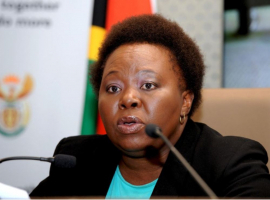
At the start of this year, Khumbudzo Ntshavheni, the minister of communications, said that Postbank is embarking on plans to roll out 100 physical branches across the country and revamp the group’s current infrastructure.
“Currently, they (Postbank) operate at the Post Office, and there is no proper banking infrastructure. Banks operate at a different level, so they must put in the necessary infrastructure – when the (banking) licence comes in, then the bank will be readily available,” she said.
The journey of the bank has been long and tedious since 1822 when it was first established as a savings bank.
In 2022, amendments to the Postbank Act were tabled, and a new corporate identity was launched. This year, the Bank Controlling Company was successfully established, and there are efforts to update the Section 16 licence.
Read: Anger over proposed new laws for home school in South Africa



 English (US)