
 3 years ago
3
3 years ago
3
ARTICLE AD BOX
Acting Eskom CEO Calib Cassim says that the utility would regard it as a success if it could prevent load-shedding from going beyond stage 6 during the coming winter.
These comments came during a panel discussion on the first day of the Enlit Africa 2023 conference in Cape Town on Tuesday, 16 May 2023.
Cassim said Eskom’s generating team had calculated load-shedding outlooks based on several permutations but that the utility was entering winter on the backfoot.
“It is going to be a tough winter,” Cassim said.
“A year ago during the winter, we had three units at Kusile that were operating, which no longer are available during this winter. That equates to 2,000MW [of unavailable capacity],” Cassim said.
These units were taken offline following the collapse of a section of a flue-gas desulphurisation duct in October 2022.
They are only expected to return to service by the end of the year, in a best-case scenario where Eskom is exempted from certain emissions limits.
In addition, Cassim said Eskom had both units at the Koeberg nuclear power station operating during last year’s winter. At peak, they could provide 1,860MW of capacity.
This time around, Eskom will only have Unit 2 available, while Unit 1 is expected to be offline until next year for its life extension project. That means another 970MW of capacity was unavailable.
 Koeberg Nuclear Power Station seen behind beachgoers near Cape Town. Credit: Johann Van Tonder / Shutterstock.com
Taken together, Eskom will have roughly 3,000MW less capacity, equivalent to three full stages of load-shedding. That’s not counting any unplanned breakdowns.
Cassim said this meant a juggle between stage 4 and stage 6 load-shedding was effectively the best-case scenario for Eskom’s winter outlook.
“If we can keep the peak [load-shedding] at stage 6 or lower and off-peak [load-shedding] at stage 4, I think we are going to have a successful winter.”
However, if the availability of the remaining units during the winter period (June to August) is similar to last year, load-shedding could go well beyond stage 6.
The highest stage of load-shedding that Eskom implemented during winter last year was already stage 6.
With an additional 3,000MW unavailable, the utility could be forced to go to stage 9 load-shedding during peak periods and stage 7 during off-peak periods.
The only way this could be avoided was if demand was drastically lowered or Eskom substantially improved the performance of its other stations.
That correlates with the predictions of University of Johannesburg physics professor Hartmut Winkler and energy expert Clyde Mallinson.
Eskom’s System Operator, which ensures that supply and demand are balanced to avoid grid collapse, recently helped update the load-shedding code of practice to include guidance for municipalities on implementing stage 9 to stage 16 load-shedding.
Under stage 9 load-shedding, Winkler said South Africans can expect to be without power for 12 hours every day — alternating between four hours with electricity, and four hours without.
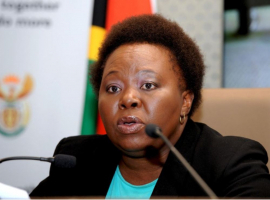
 Calib Cassim, Eskom chief financial officer and acting CEO
Cassim not losing sleep over a blackout
Eskom recently published a statement refuting claims of an imminent grid collapse circulating on social media.
“The risk of a national blackout, while inherent to the operation of a large power system, has an extremely low likelihood of materialising given the implementation of a number of control measures, including load-shedding,” Eskom said.
“The grid is by no means at a higher or imminent risk of a collapse, and it would take an unforeseen and sudden sequence of events that results in a cascading collapse of the transmission or generation system.”
Cassim also emphasised that he was not concerned about a blackout at this stage.
The acting CEO said he was not losing sleep over the issue as he had confidence in the work of the System Operator staff. He said he was more concerned that they would need to go to stage 8 load-shedding.




 English (US)