
 3 years ago
2
3 years ago
2
ARTICLE AD BOX

The South African Reserve Bank (SARB) has implemented a new toolkit for assisting in the execution of monetary policy in the country.
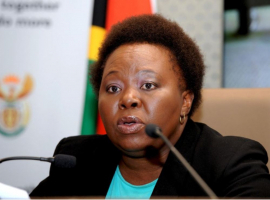
Speaking at the CFA Society South Africa & Investec Breakfast Conversation on 10 May, Rashad Cassim, the deputy governor of the SARB, said that South Africa is one of the first emerging markets to adopt a new method of monetary policy implementation as seen in countries like New Zealand and Norway.
The monetary policy broadly refers to the process by which central banks such as SARB manage the supply and demand of money to achieve economic objectives such as price stability and economic growth.
The latest decision from SARB’s Monetary Policy Committee (MPC) was the surprising hike to interest rates by 50 basis points in late April. This hike took the repo rate to 7.75% and the prime lending rate to 11.25% – a 14 year high.
Economists and analysts at large now expect a further rate hike in an attempt to cool inflation and mark a further push to the peak of the rate cycle that started in November 2021.
SARB’s new monetary policy implementation framework (MPIF), which was phased in over June and August last year, allows for limits to be put on how much retail banks can leave with the central bank until they earn a lower policy rate – preventing banks from hoarding reserves and ensuring a high functioning interbank market.
According to the Cassim, banks are provided with a larger supply of reserves (also called settlement balances) than they need to satisfy reserve requirements and make interbank payments.
Essentially, there is now a surplus of bank reserves relied upon when crises occur, such as the pandemic, for example, whereas previously, the old system depended on a shortage of bank reserves.
Cassim said the SARB had made money to assist the banking system through loan creation. Explaining the method by which the bank created a sum of money, he provided the following example:
“A bank takes in a deposit, and that deposit meets the definition of money – for example, this is the money you have in the bank. But then the bank makes a loan, for instance, to someone who borrows for a car or a house.”
“And that loan also appears as a deposit at a bank, which is also money. In this way, the act of credit creation expands the money supply,” said the deputy governor.
He said that having extra money available means that the SARB could stop draining liquidity, unwind operations that let banks hold extra cash instead, on which they could earn the policy rate.
“The logic of this system is that abundant liquidity puts downward pressure on rates. But the deposit facility forms a floor: it is not attractive to lend to anyone else or buy assets with an inferior return to what the SARB offers. For this reason, these frameworks are often called floor systems,” said Cassim.
The reason for building a bigger surplus is simple, said Cassim.
“It is cheaper, simpler and less distortionary to pay repo on excess bank reserves, in quotas, than to manage this liquidity using other tools. The size of the surplus is therefore based first on what quantity is sufficient to keep rates near the floor and second on what achieves efficient management of the SARB’s liability structure. ”
Under the new system, SARB could inject liquidity into the market during periods of financial stress to stabilise the overall system without compromising the freedom of the monetary policy committee to select an interest rate.
“Next time we hit a crisis, we anticipate the financial system will start off more resilient, given a larger pre-existing liquidity supply. And if this proves inadequate, we have powerful tools to inject further liquidity,” said Cassim.
These changes made behind the curtain from the general public are likely to have modest effects on everyday financial interactions; however, from a broader operational perspective for the central bank, these are big changes.
SARB said that the reform would have a handful of impacts on the larger economy.
Due to its efficiency, the new framework will improve and save the broad public sector money and facilitate further credit extensions by expanding liquidity and reducing liquidity risks for lenders.

SARB sharpens its tools for interest rate hikes in South Africa




 English (US)