
 3 years ago
1
3 years ago
1
ARTICLE AD BOX
- For more financial news, go to the News24 Business front page.
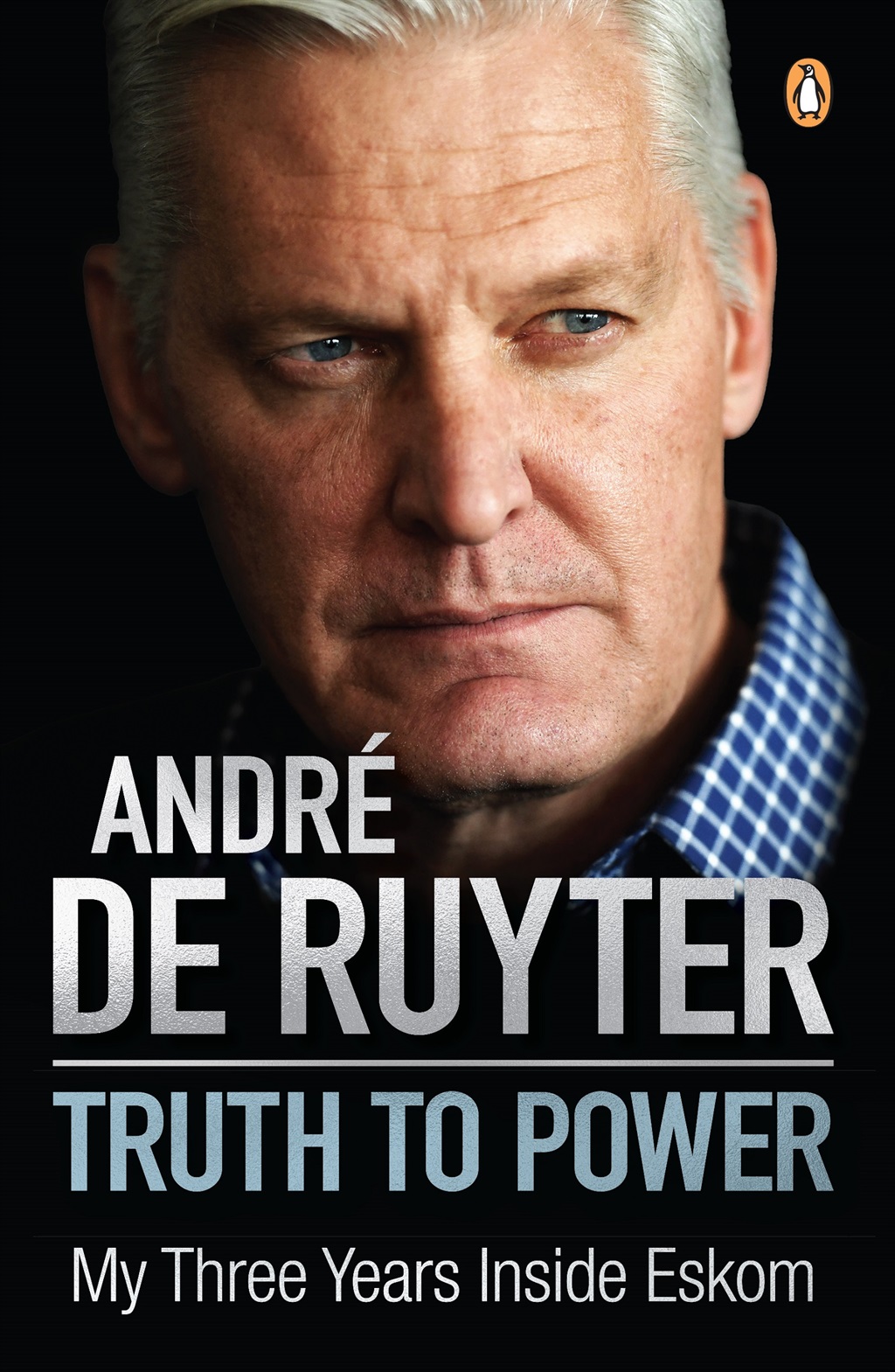
André de Ruyter's combative memoir, Truth to Power: My Three Years Inside Eskom, was released on Sunday.
It's a frank account of his frustrations with the ANC government and his views of the corruption and ineptitude inside the utility.
Here are some of his most contentious, and sometimes amusing, observations in the book:
In a chapter titled The land of Porsches and Louis Vuittons (a reference to his view that some Eskom staff were flaunting ill-gotten wealth), De Ruyter recounts how he became increasingly aware he heads an organisation where employees are connected to organised crime syndicates.
I was indeed the inadvertent Tony Soprano of the power industry.
How much of Eskom's troubles had to do with criminality and how much with incompetence and ageing equipment is difficult to calculate exactly. If pushed, I would probably venture that around two stages of load shedding could be ascribed to sabotage, theft and corruption.
He calls Mpumalanga the "Wild West in terms of the law", where stakeholder events must offer buffets because individually plated meals "open the door for poisonings".
Much of the book details his exasperation with the slipshod way power stations are run, with horrific descriptions of neglect and incompetence.
He also had strong views on why some Eskom employees are ill-equipped for their jobs, including:
[Part] of the skills problem arises from the fact that BTech degrees have been placed on an equal footing with university degrees. I know this is a controversial viewpoint. The BTech guys like to present themselves as engineers, but they are not really engineers. They are technicians. It suits everyone to believe this fiction - because it allows you to play the numbers game [transformation targets] with a degree of success.
In 2021, he first met President Cyril Ramaphosa at his private residence in Hyde Park, which he describes in the book:
The house reminded me of one of those residences loved by the nouveau riche Afrikaners. It was built to impress rather than to be liveable. The original owner had gone for the Douw Steyn approach. Make it big! Make it big! A whole convoy could park in the porte-cochère.
Ramaphosa impressed him during the meeting, and De Ruyter praises his keen understanding of complex issues. However, this assessment soon sours due to what he perceives as a lack of action by the president and an anti-business approach inside government:
President Ramaphosa, widely regarded as a successful and wealthy business magnate, is not someone who has hands-on experience of building an enterprise from the bottom up. Shrewd corporate dealmaking, lubricated by favourable black empowerment legislation, built his fortune. He ran little to no entrepreneurial risk. The dearth of business experience in its top echelons means that the ANC consistently fails to understand what moves investors. Our strict procurement and labour laws poison the well and have them heading for the hills.
De Ruyter accuses Mineral Resources Minister Gwede Mantashe of being particularly antagonistic towards him, and obstructive in De Ruyter's attempts to increase power generation from renewable sources.
De Ruyter describes an encounter in June 2020 at an event to launch a large renewables procurement push:
Ambling up to me in a manner that belied the feline grace of his nickname, the Tiger, he stood very close to me, so that for a moment we were alone in a crowd of people. In his characteristically gruff voice, he growled menacingly at me: 'CEO, you'd better fasten your seatbelt. This ride is going to get bumpy from now on.'
But De Ruyter also chronicles a pivotal 2022 meeting where Ramaphosa outplayed his obstreperous minister to finally lift the licensing threshold for private power generation. This meant solar and wind projects of any size could now be built without a licence.
Mantashe remarked that the current cap was 100 MW, and that there wasn't even a sign of 1 MW on the grid. Somewhat petulantly, he added that we might as well scrap the cap completely because it wouldn't make a difference either way. Ramaphosa took the gap like a Springbok centre. 'Then we'll lift the cap entirely!' he proclaimed. In one fell swoop, the president had cut the Gwedian knot and taken a huge step towards lifting the cap on own generation, thereby defanging Mantashe's department and effectively liberalising the electricity market.
Securing $8.5 billion in concessional finance from rich countries to fund South Africa's transition to renewables was his proudest moment as Eskom CEO, De Ruyter writes. But as he describes it, he had to manoeuvre behind the scenes to get the deal done, without help from government.
We were competing with other nations, but [Minister of Trade and Industry Ebrahim] Patel thought the world owed us something. South African exceptionalism writ large. I was regularly astounded that this was the man driving our industrial policy.
Every year, 29 000 South Africans die prematurely because of air pollution. This is a national health crisis, but leading government figures like Nkosazana Dlamini-Zuma are only concerned with people smoking.
Meanwhile, Julius Malema impressed him during an encounter at the EFF's march to Eskom's office, in protest of De Ruyter's appointment and the power crisis.
Malema is charismatic, intelligent and disciplined. Underestimate him at your peril. He is extremely reasoned and sophisticated. Those who regard him as a buffoon and an ignoramus are in for a rude awakening.
After fractious parliamentary briefings, De Ruyter was scathing about the Standing Committee on Public Accounts, or as he calls them: "Self-proclaimed high priests of public probity, otherwise known as SCOPA", which accused him of not respecting them.
[A] charge that I have to confess was not completely without merit.
Despite presenting them with clear evidence of crime at Eskom, De Ruyter contends there was little action and much ineptitude from the police and State Security Agency (SSA).
Frustrated, he started to raise millions from the private sector, including Business Leadership South Africa (BLSA), to fund an independent investigation led by former police commissioner George Fivaz.
A series of intelligence reports were released that linked two top politicians - unnamed in the book, but reportedly Mantashe and former deputy president David Mabuza - to a web of underground coal cartels.
A News24 investigation has revealed that an apartheid intelligence operative was part of the investigation, which contained untested allegations.
Fivaz himself acknowledged to News24 there is no evidence that linked Mantashe and Mabuza to Eskom corruption, but just "unsubstantiated information" from "sources".
READ | 'Mantashe, Mabuza or both poisoned De Ruyter' - inside the Fivaz reports
When De Ruyter shared with BLSA representatives some of the intelligence, including the purported involvement of two senior politicians, their negative reaction surprised him.
Big business can often be disappointingly cowardly, and its lack of courage was on full display at this meeting. As in the apartheid years, when many business leaders were scared to rock the boat, these businesspeople didn't want to upset the ANC government too much - lest it harm their chances of making a buck. 'This is turning into a rogue unit,' one said. 'We never signed up for any intelligence-gathering. This was just going to be a desktop exercise.' I was taken aback at this version of events. This person had been present at several meetings where it was made crystal clear that the investigation's raison d'être would be the gathering of intelligence.
The secret investigation then proceeded with money from other sources, including an unnamed billionaire.
In July 2022, De Ruyter decided to share the findings - including the allegations against the two politicians - with Gordhan and national security advisor Sydney Mufamadi. This is his account of the conversation:
'Can I name them?' I asked Gordhan, who was also accompanied by one of his advisors. The minister indicated that I should go ahead. I expected him to be shocked, but instead his reaction surprised me. Gordhan looked over at Mufamadi and said, 'Well, I guess it was inevitable that it would come out.'
At the time, Ruyter found a suspicious electronic device in his car, which Fivaz identified as a bug and handed over to the SSA for further investigation.
I'm told that a senior spy turned pale when he saw it. I also received a phone call from someone who works for the inspector-general of intelligence. My source had also recognised the device as one of theirs.
He also describes his suspected poisoning, and the reaction from Gordhan and new Eskom chairperson Mpho Makwana.
Gordhan immediately called me and was very solicitous. He was concerned for my safety and outraged that this had happened. He immediately made the connection to my battle against organised crime and corruption, and told me that the attempt on my life was an indication of how close we were getting to the real crooks. He even made the effort to drive to my house in Hermanus during the holidays to commiserate, which I very much appreciated. Mpho's reaction was somewhat different. 'Sad to hear,' he texted me, as though my hamster had died.
READ | De Ruyter book extract | A 'WTF' moment with the new Eskom chair
After Mantashe accused De Ruyter of trying to overthrow the state, De Ruyter told Gordhan he considered resigning.
Gordhan's response was characteristic: 'Hold on', he said, 'I will tell you when it is time to go'. My response was blunt: "No, Minister, I will tell you when it is time for me to go."
De Ruyter ends his memoir with a lengthy personal assessment of his achievements - and what he failed to accomplish due to government's dithering and political infighting alongside "the vested interests of corrupt actors".
Looking back on the patriotic ambitions with which I took on the job, I have the satisfaction that, unlike the twenty-eight who turned it down, I at least tried. I did my best when armchair critics aplenty were wringing their hands.
Truth to Power: My Three Years Inside Eskom is published by Penguin Random House SA.




 English (US)