
 3 years ago
1
3 years ago
1
ARTICLE AD BOX
Energy access or lack of it should be considered through a gender lens. Irene Charnley explains why.
Energy availability is critical in women's and girls’ daily lives. As a result, load shedding has a direct and negative impact on women and girls' human rights and security and indirectly sponsors gender-based violence.
The biggest victims of the energy crisis are women who are engaged in chores that require energy. There is also the issue of energy poverty in rural areas, where women spend their time at home caring for children and engaging in manual labour.
Energy access is a lever for women's social and economic empowerment, and we as women bear the brunt of consistent load shedding due to the nature of traditional or gender-based household roles.
Energy through a gender lens
There are several reasons why energy access or lack of it should be considered through a gender lens.
To run a house requires resources, and energy is one of the most important requirements for that. More than 90% of the women in our country have daily household chores.
Now imagine the major challenges facing women around access to energy outside of the workplace, such as cooking and serving meals for families, lighting for teaching their children at night, and energy for their small businesses.
There is no doubt that electricity increases productivity and enables all of us as women to thrive, ultimately contributing to improved social and economic outcomes for individuals. The Washington-based International Centre for Research on Women, whose mission is to empower women, advance gender equality and fight poverty, reminds us that economic empowerment is when a woman "has both the ability to succeed and advance economically and the power to make and act on economic decisions."
The UN’s Sustainable Development Goals (SDGs) target access to energy (SDG 7) and gender equality (SDG 5).
The SDG’s aim to provide energy access for all by 2030 cannot be achieved unless women are brought into the policymaking process and the gendered decisions around energy use are addressed thoughtfully.
A study executed by South Africa's Taryn Dinkelman during the mass rollout of electrification found that rural electrification raised female employment in electrified communities by 9.5 percent, as it "released women from home production and enabled microenterprises, while having an indeterminate impact on male labour rates in the same communities."
Another study in Nicaragua illustrated that access to reliable electricity increases the propensity of rural women to work outside the home by approximately 23 percent due to more efficient home production in the form of lighting and modern cooking appliances, while it has no impact on male employment.
We know that in the far-flung rural areas of our country, women's physical safety is at risk when they must walk great distances to collect water from communal taps. Instances of violence while standing in line for water, sexual harassment and rape along the way, and threats of domestic violence are being documented from rural areas.
Energy and maternal health
Beyond the household, community-level electrification that powers health clinics and hospitals provides the ability to refrigerate medicines and can have a strong beneficial effect on maternal health and women’s wellness.
Therefore providing more reliable electricity to healthcare facilities would positively affect maternal health and may generate longer-term benefits by improving newborn care.
This means whether through causation or correlation, gender inequality and poverty and energy availability are closely intertwined.
Improved access to time-saving electric appliances has been significantly more transformative for women due to their role relative to household chores.
After all, household electrication is associated with increased school attendance, particularly among teenage daughters, and has ultimately led to improvements in the labour market outcomes of subsequent cohorts of women.
Therefore improved energy access should be part of a broader strategy that enables women to spend their extra time on economically empowering activities.
We know that energy availability can alleviate women's time and poverty, create opportunities for women and girls to enter the labour force or focus on school, decrease exposure to harmful indoor air pollutants by using kerosene (paraffin) stoves, improve maternal health, reduce exposure to and acceptance of gender-based violence, and change social norms through access to information.
For example, residents of Soweto said that the frequency of load shedding had left them vulnerable, with criminals who use the load-shedding schedule to plan and execute criminal activities, including abduction and killing of two children aged five and six whose bodies were found in separate locations with missing body parts after they were reported missing the day before.
Community members of White City in Soweto lamented that the search was made all the more difficult due to the relentless power cuts.
Newsletter
Weekly
Opinions Weekly
Opinions editor Vanessa Banton curates the best opinions and analysis of the week to give you a broader view on daily news happenings.
So what are the solutions for women's pain caused by unending load shedding? Understanding and recognising that energy is important in women's daily lives, the International Women's Forum of South Africa (IWFSA) hosted a symposium recently to discuss solutions that will contribute to ending the nation's energy crisis.
Among others, leading women panellists agreed that from an economic perspective, pursuing universal electrification is a worthwhile investment if it is efficiency or equity-enhancing.
READ | Khaya Sithole: The pain of literacy load shedding
The International Renewable Energy Agency estimates that by 2030, renewable energy sources will provide over 60 percent of new electricity access, with almost half produced by standalone and mini-grid systems.
This means expanding electricity access using renewable energy sources and support for policies which promote universal electricity access by prioritising sustainable technologies that integrate gender into every stage of the electrification process can and will offer solutions to the energy crisis.
Therefore for sustainable electrification to meet its full potential of expanding access while empowering women, policies should mainstream gender throughout the entire renewable energy value chain.
Stop finger pointing and come up with solutions
Delegates at the symposium agreed that expanding electricity access using sustainable off-grid technologies presents additional opportunities to enhance women's economic power by developing the nascent industry in a gender-inclusive way.
It is time to stop finger-pointing and devise solutions to the energy crisis. Solutions to the energy crisis should include:
- Increased national generation and supply of energy - focus on solar, wind and gas, and cleaner coal power generation
- Increased local/municipal/ supply where municipal or microgrids distribute energy - focus on smart meters, local generation, safeguarding jobs and supporting business
- Meeting and lowering household use during peak time (for cooking, cleaning, lights, and gadgets from 17:00-19:00) through wise energy use and battery storage.
- Access to Short term Cash/Capital requirements example, pension funds;
- Investment and financing of new generation and grid capacity and
- Effective campaigns and united action against crimes such as sabotage of power stations, supply chain corruption, cable theft and illegal electricity connections.
We need to continue working on working towards prioritising electrification and energy availability policies that will enable women’s empowerment.
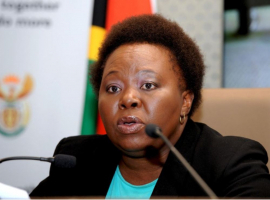
- Irene Charnley is a successful and seasoned businesswoman and President of the International Women’s Forum of South Africa, the local division of a global organisation of over 7 500 pre-eminent women across 36 nations and six continents.
*Want to respond to the columnist? Send your letter or article to opinions@news24.com with your name and town or province. You are welcome to also send a profile picture. We encourage a diversity of voices and views in our readers' submissions and reserve the right not to publish any and all submissions received.
Disclaimer: News24 encourages freedom of speech and the expression of diverse views. The views of columnists published on News24 are therefore their own and do not necessarily represent the views of News24.





 English (US)