
 3 years ago
1
3 years ago
1
ARTICLE AD BOX

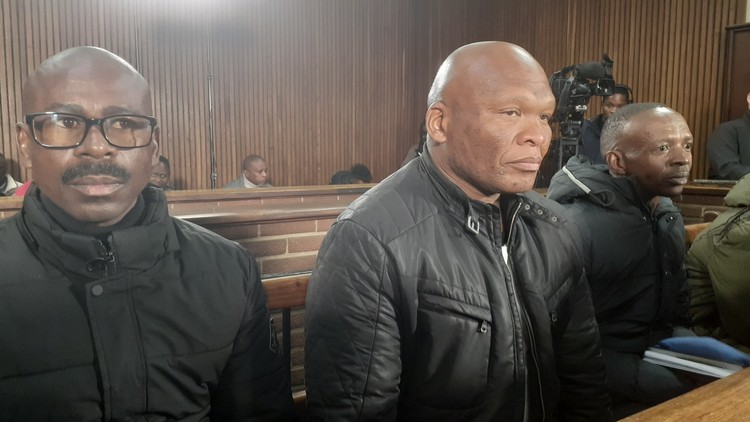
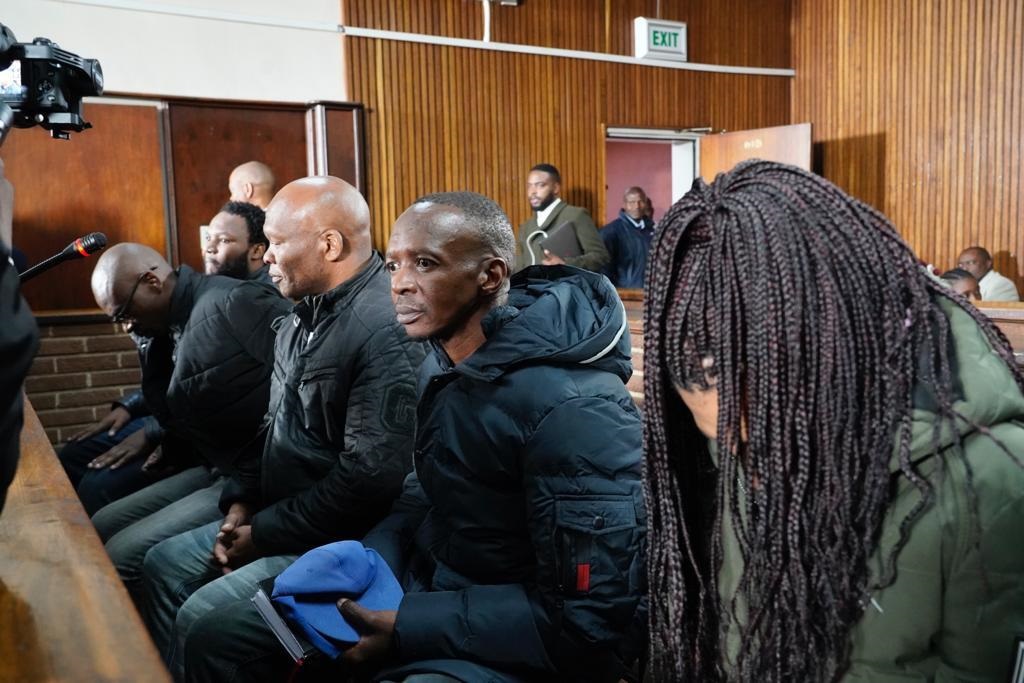
Iqbal Sharma, Seipati Dhlamini, Limakatso Moorosi and Peter Thabethe have stood trial in the Free State High Court for fraud and money laundering.
PHOTO: Mlungusi Louw, Gallo Images, Volksblad
- The National Prosecuting Authority's Investigating Directorate has launched its appeal against the R24.9-million Nulane Investments fraud and money laundering judgment.
- In April, the first state capture case brought to trial saw the Free State High Court granting Section 174 discharges to all but one of the accused in the case.
- The Investigating Directorate said that there were reasonable prospects that another court would come to a different conclusion.
The National Prosecuting Authority (NPA)'s Investigating Directorate (ID) says it has submitted its application for appeal against the R24.9-million Nulane Investments fraud and money laundering judgment.
The application was filed on Monday, with the ID arguing that Acting Judge Nompumelelo Gusha erred in her judgment by granting Section 174 discharges to all but one of the accused in the Nulane case.
The final accused, former Free State agriculture department official Limakatso Moorosi, had her case closed and was then acquitted.
The Free State High Court ruled that the State had failed to produce enough evidence to show that the Gupta family and their associates were implicated in the laundering of R24.9 million of the proceeds of the alleged Nulane scam.
However, ID spokesperson Sindisiwe Seboka said the State had presented prima facie evidence which may lead a reasonable court to convict.
READ | 'A comedy of errors’: How NPA’s Nulane state capture case fell apart, to the Gupta family’s joy
In filing its application to appeal, the ID said that there were reasonable prospects that another court would come to a different conclusion and/or find that granting the discharge was a "misdirection that was contrary to legal precedent, constituted a gross irregularity in the trial and was prejudicial to the State".
Seboka said the judge had erred by deviating so "drastically" from the parameters of the test for a discharge that a miscarriage of justice had occurred, in that the accused persons against whom a prima facie case had been made were acquitted without having to put forward a defence.
The ID also based its application on the following:
- It is submitted to be trite law that the Section 174 inquiry does not entail a finding being made as to whether or not the evidence of the State at this stage is plausible or constituted proof of guilt beyond a reasonable doubt.
- The learned judge erred by concluding in her judgment that the State failed to pass even the barest threshold and that an application for discharge cannot be refused in the hope that the accused persons will incriminate themselves when they give evidence, thereby closing material defects in the State’s case.
- The learned judge erred in interpreting and applying the "best evidence rule".
- The learned judge erred in her interpretation and application of the law relating to the cautionary rule, Section 204 of the Act, the assessment of the evidence of the Section 204 witness, and the credibility findings made against the Section 204 witness.
- The learned judge further erred in her interpretation and application of the doctrine of common purpose (collusion and conspiracy).
- The learned judge erred during the Section 174 judgment in finding that Siphiwe Mahlangu’s evidence did not serve as an authentication on the disputed documents since he was neither the author thereof, nor was he present when same were either authored or had signatures appended to it.
- There are reasonable prospects that another court would find that the learned judge erred by making contradictory rulings that prejudiced the State when dealing with the issue of the admissibility of documentary evidence.
"The ID is mindful of the court process and will not be commenting on the application filed," Seboka said.
The State argued that the Free State Department of Agriculture had paid R24.9 million to Nulane, a company owned and controlled by former Transnet board member Iqbal Sharma, for a fraudulent feasibility study of the Free State's flagship Mohoma Mobung project - the genesis of the alleged Vrede dairy project scam - between 2011 and 2012.
However, Nulane had no employees on its books and subcontracted Deloitte to produce the report.
How safe is your neighbourhood? Find out by using News24's CrimeCheck
Deloitte was paid R1.5 million for the work.
Nulane is alleged to have subsequently changed the findings of the Deloitte-authored study to identify Paras - an Indian dairy farm allegedly linked to the Guptas - as the most suitable implementing partner for setting up a milk processing plant in Vrede, Free State.
The alleged Vrede dairy project scam, which would see millions of rand intended for poor black dairy farmers allegedly being diverted to the Guptas and their associates, was then born.





 English (US)