
 3 years ago
1
ARTICLE AD BOX
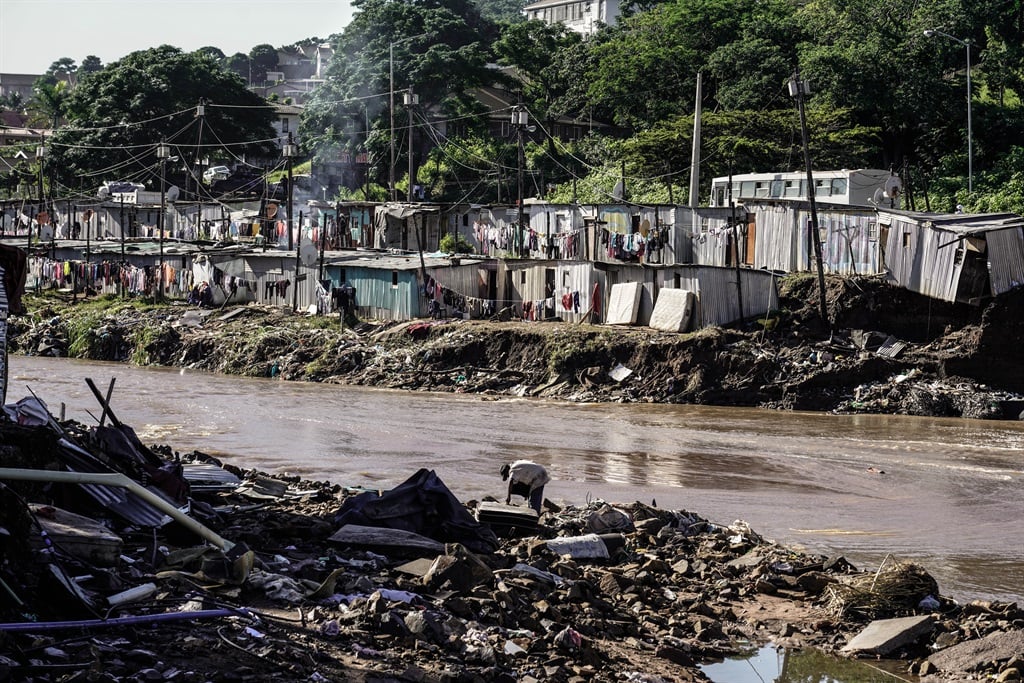
A study has revealed that climate change increased the likelihood and intensity of the KwaZulu-Natal floods this year.
- Residents of informal settlements are highly vulnerable to climate change.
- Informal settlements are often poorly located below flood lines, and residents do not have the means to protect themselves against extreme weather.
- This year, KwaZulu-Natal experienced the devastation of floods, with more than 400 people losing their lives and tens of thousands displaced.
- For climate change news and analysis, go to News24 Climate Future.
Extreme weather conditions brought about by climate change will continue to place residents of informal settlements at risk, according to Gina Ziervogel, an associate professor at the University of Cape Town (UCT).
Ziervogel specialises in urban climate governance and transformative adaptation.
Residents of informal settlements were in a highly vulnerable and sensitive position because they had increased exposure to extreme weather conditions but had limited capacity to deal with them, she told News24.
Informal dwellings are makeshift structures or shacks which are not built according to approved architectural plans – whereas formal dwellings are built according to approved plans and include houses on allocated stands, a flat or an apartment or rooms in a backyard.
Statistics South Africa's General Household Survey of 2021 shows that informal dwellings make up 11.7% of all households. The majority, or 83.6%, of households are formal dwellings. Data from the Department of Human Settlements indicates that there are 3 605 informal settlements in South Africa, with the majority in the Western Cape, KwaZulu-Natal and Gauteng. Half of these settlements are in metropolitan municipalities.
Climate change and extreme weather
The latest reports from the Intergovernmental Panel on Climate Change (IPCC) confirm that there will be an increasing frequency and intensity of extreme weather conditions such as floods, droughts and heatwaves, says Tafadzwanashe Mabhaudhi, a climate scientist at the University of KwaZulu-Natal. There will also be increased variability in weather patterns, according to Mabhaudhi.
"For South Africa, these impacts will be variable, with [some] places experiencing greater rainfall while others will experience increasing dryness. In wetter areas, and even drier areas, storms and flash floods are expected to increase," he says.
South Africa has already seen the consequences of climate change this year. An attribution study has revealed that climate change increased the likelihood and intensity of the KwaZulu-Natal floods this year, according to him.
More than 400 people lost their lives and more than 40 000 were displaced by the flooding.
'Poorly located'
"The situation in informal settlements is quite complex," says Ziervogel. Often people are settled on flood plains or areas that are meant for detention ponds, which are for moving water away from surrounding areas.
Informal settlements are often poorly located. These areas do not allow for the construction of buildings and are often on steep slopes and below flood lines, says Tom Sanya, a senior lecturer at the school of architecture at UCT.
"If you are located below the flood line, it means that the chance of flooding each year is increased by 50%," he adds.
READ | EXPLAINER | What's behind Joburg's heavy summer storms?
Sanya says people living in informal settlements are also vulnerable due to their socio-economic conditions because they are unable to protect themselves from extreme weather conditions.
For example, in Hout Bay, Cape Town, the buildings of rich people are below flood lines, but measures have been taken to prevent flooding, such as draining and dikes, so that these buildings are safe. But if you have a shack in a low-lying area, or on a steep wall in a low-lying area without stabilising and retaining walls, or without grass or plants, you are unprotected, he adds.
Newsletter
Weekly
Climate Future Weekly
An overview of the challenges and opportunities of the climate crisis, as it changes the world we know.
Climate justice
An important aspect of achieving climate justice is listening to the needs of those living in informal settlements, according to Ziervogel.
"I do not think there is enough focus on informal settlements currently when climate risk is considered. We are seeing cities present climate adaptation plans but more needs to be done to ensure that those in lower-income areas are included in that planning and that their needs are met," she says.
Sanya says that with the growing number of informal settlements, government and NGOs need to be proactive and collaborate to address these issues.
"As the president noted during the April floods [in KwaZulu-Natal], South Africa has not adequately budgeted for and prepared for these disasters," says Mabhaudhi.
"There is an urgent need to put in place climate change adaptation measures, build resilience, climate-sensitive spatial planning, education awareness and building preparedness so that we mitigate the scale of these disasters and impacts on livelihoods and lives," he adds.




 English (US)