
 3 years ago
1
3 years ago
1
ARTICLE AD BOX
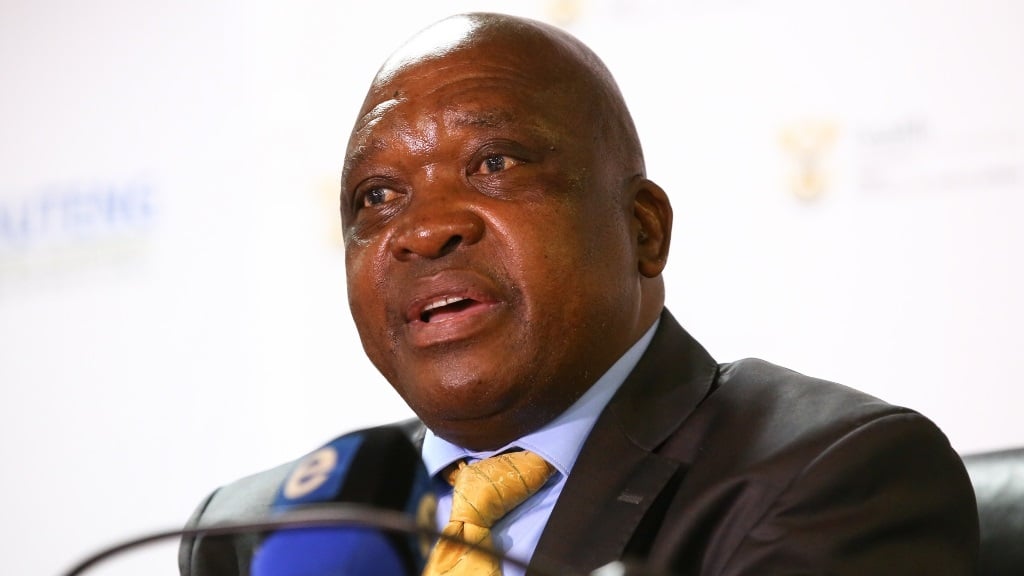
Health Minister Joe Phaahla.
PHOTO: Luba Lesolle, Gallo Images
- The budget allocation for the national health department has shown a decline of R4.4 billion.
- Over the medium-term expenditure framework, R7.8 billion had been allocated to support provinces for interns and conserves.
- An amount of R8.7 billion within the HR grant is allocated for specialist training over three years.
National Treasury has acknowledged the national health department is underfunded by a minimum of R11 billion.
But Health Minister Dr Joe Phaahla strongly believes the shortfall could be even higher.
Phaahla delivered his department's 2023/24 budget speech in Parliament on Tuesday.
"Our budget vote takes place when our country's economy is not doing well following the Covid-19 pandemic and now load shedding. The financing of public health is seriously negatively affected by this situation," he said.
Phaahla added the 2023/24 budget allocation for the department showed a decline of R4.4 billion, from R64.5 billion in 2022/23 to R60.1 billion in 2023/24.
"Even though the R4.4 billion decline can be attributed to the discontinuation of conditional grants which were allocated for the fight against Covid-19, including vaccination, the fact of the matter is that there is not even [an] inflation adjustment, and there are also reductions in allocations to existing programmes."
He said just under 90% of the department's budget was transferred to provinces.
In the current budget, the transfers and subsidies to provinces amounted to at R56.2 billion of the R60.1 billion.
The minister said despite the challenges the department faced it was making progress "on several fronts".
Phaahla added an amount of R10 million per year over the next two years would go to the no-fault scheme to cover adverse events following Covid-19 vaccination.
He said over the medium-term expenditure framework, R7.8 billion had been allocated to support provinces in employing interns and funding community service programmes.
The minister added:
A further R8.7 billion within the HR grant is allocated for specialists training over the three years. In the last 10 years, there has been a significant increase in the training of doctors by our medical schools and added on by graduates from Cuba. As a result, the number of medical interns increased from 500 in 2015 to 2 625 in 2022 while medical [community service practitioners] increased from 1 322 to 2 369 over the same period.
Phaahla said at times, the provinces could not accommodate the medical officers after they had completed their community service stints due to budget constraints.
"We are working with the South African Medical Association Trade Union [Samatu] to make sure that doctors who want to work in the public sector are assisted in getting posts."
He added the department's "exit out of Covid-19 as a health emergency and pandemic enabled us to focus on improving services from primary health care to specialised care".
"A key ingredient of that is suitable infrastructure. It is the ordinary course that many of our facilities need attention for maintenance, refurbishment, upgrades, or replacements, but we also need new infrastructure.
"To support provinces in this regard, we have R7.2 billion over three years for direct transfer based on approved plans.
"Also, under National Health Insurance grants we have R1.4 billion, which is implemented by the Department of Health in provinces on agreed projects."
Phaahla said the infrastructure team had been instructed to look at ways in which the department could reduce delivery timelines and costs of implementation without compromising quality.
"We are also looking at alternative methods of funding to increase the pace and scale of delivery.
"Acquisition and maintenance of equipment are also under the spotlight where we are also looking at faster turnaround times and reliable maintenance plans," he added.






 English (US)