
 3 years ago
1
3 years ago
1
ARTICLE AD BOX
- A renewable energy plant in Clarens is changing the face of the tourism town into a "clean energy" town.
- As part of its socioeconomic requirements, hydroelectric plant Kruisvallei Hydro has rolled out different initiatives to address social ills in a nearby community.
- The success of these initiatives is largely driven by a collaborative approach with community representatives, instead of imposing projects on them.
- For climate change news and analysis, go to News24 Climate Future.
Clarens, the tourism town in the eastern part of the Free State, is known as an ideal weekend getaway, offering hiking trails, scenic views of the Maluti Mountains, and if you're lucky, your trip may coincide with the annual craft beer festival.
But something else is brewing in Clarens.
The prospects of those living in the rural community of Kgubetswana are changing for the better thanks to a nearby renewable energy project, Kruisvallei Hydro.
The small hydroelectric project, with an installed capacity of 4MW, consists of two plants built along the Ash River running between Clarens and Bethlehem. It is part of Bid Window 4 of the Renewable Energy Independent Power Producer Procurement Programme (REIPPPP), and it's been operational since 2021.
It feeds as much as 23GWh to Eskom's grid, enough to power roughly 7 000 households annually, bearing in mind South Africa is estimated to have 18 million households.
Constructing the plant took two years and created as many as 238 jobs. Now, during its operations, four people are permanently employed, and they conduct maintenance at the plant.
This might seem like a small impact on paper, especially relative to a typical coal plant. Power utility Eskom’s coal-fired power station Tutuka, for example, has 850 employees and 100 trainees. But the scale of the coal plant is massive – it has an installed capacity of 3 654MW. Kruisvallei Hydro's installed capacity is not even a fraction of that.
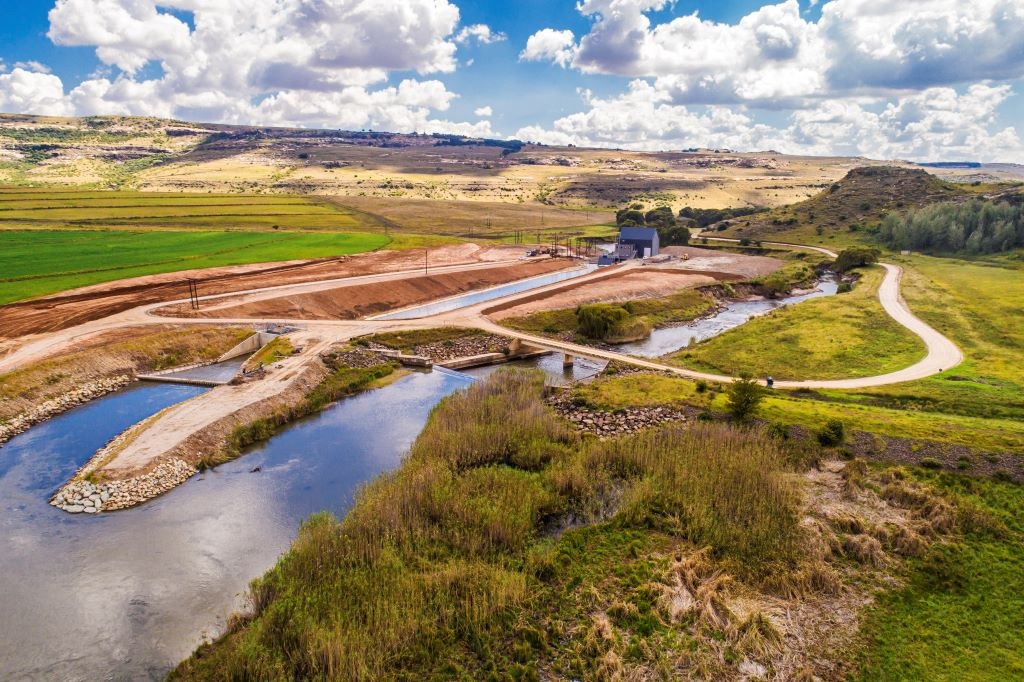
Kruisvallei Hydro is considered a clean form of energy generation - because no emissions are released through its operations. The kinetic energy (energy from movement) from the water flowing downstream along the river is captured by turbines and converted to electricity through a generator. The electricity generated is then fed into Eskom's grid.
Supplied Red Rocket
Collectively the REIPPPP programme, which launched 12 years ago, has a portfolio of 115 projects. Latest statistics from the Independent Power Producers Office (IPPO), which oversees the programme, indicate that 6 105MW from renewable energy projects is connected to the grid. That's enough to power 26.2 million households.
The comparison between renewables and coal plants does not take into account the costs that come with polluting fossil fuel – the harmful impacts of emissions on health and the environment and exorbitant water use.
READ | OPINION | SA's renewable energy projects need to strongly focus on social performance
The REIPPPP also requires power plants to deliver socioeconomic projects to nearby communities for the lifetime of the plant. That's about 20 years of initiatives to bolster education, improve employment prospects, build infrastructure such as health facilities and telecommunications in places which are literally in the middle of nowhere, and address other social ills.
And that's over and above delivering electricity to the national grid, which supports energy access.
Louis Moyse, acting head of contract management and economic development at the IPPO, told News24 in March that the investment in socioeconomic development from these projects amounted to R2.2 billion. The spend on enterprise development is around R0.7 billion. Moyse reckons that this is a lot - when submitting bids in the public procurement process, developers commit a percentage of their revenue towards socioeconomic development spend. The threshold stipulated for the programme is 1%.
In the past 12 years, this social impact requirement has become an accepted part of responsible business practice. "I think there is a social responsibility acceptance by the projects. What they take, by producing the energy, they also have the responsibility to make sure the communities where they are hosted are being taken care of properly," said Moyse.
Newsletter
Weekly
Climate Future Weekly
An overview of the challenges and opportunities of the climate crisis, as it changes the world we know.
Different developers have tackled different social challenges in communities.
CPV1, a 36MW solar plant near Touwsrivier in the Western Cape, which is part of Bid Window 1 of the REIPPPP and has been operating since 2015, has targeted social impact projects in education, job creation and enterprise development.
Its bursary programme supported the tertiary studies of 43 beneficiaries between 2016 and 2022. Its small business development programme supported 84 beneficiaries and was aimed at encouraging the pursuit of entrepreneurial opportunities among community members.
Another Bid Window 4 project, Dyason's Klip 2, by renewable energy developer Scatec, has been operational since 2020 and has directed social development initiatives toward youth development, health, training and education, social welfare and financial assistance for small, micro and medium enterprises.
The beneficiary communities of the 86MW solar plant are the Dawid Kruiper and Kai! Garib Municipalities in the Northern Cape.
According to Scatec, the initiatives have both direct and indirect beneficiaries. For example, the project supports six cooperatives in the area that employ women who manufacture school uniforms for about 17 schools in the area. Apart from the learners that benefit from school uniforms, the households of the seamstresses also benefit from the wages they earn. In turn, small businesses that provide the materials for the sewing project also are positively impacted by the initiative.
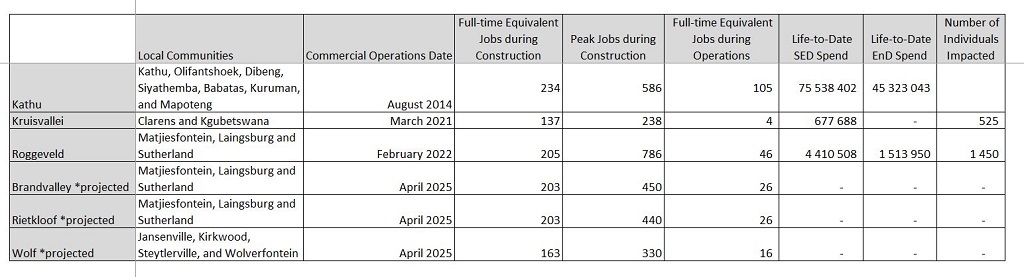
The actual and projected impacts of Red Rocket's projects in the REIPPPP. Kruisvallei Hydro, is one of its projects.
Supplied Red Rocket
The scale of the social impact of renewables in a small community is massive, especially considering the knock-on effect it has on both individuals and families.
A key part of ensuring that the impacts are meaningful is ensuring extensive consultation with communities.
Tebogo Mohlahlana, economic development and community manager at Kruisvallei Hydro, explained that its social impact interventions involve collaborations with existing projects in the community. "We would rather plug into an existing programme than invent a whole new programme. There is no need to reinvent the wheel," Mohlahlana said.
Key in linking Kruisvallei to these existing initiatives is community liaison officer Ntsebe Mofokeng, who grew up in Clarens and has spent 20 years working in community development.
Mofokeng connected Kruisvallei Hydro to local early childhood development centres, where the training of nine teachers was sponsored by the project.
Kruisvallei Hydro has also assisted in the delivery of dignity packs, which contain basic toiletries and sanitary pads so that girls can continue going to school.
READ | Uplifting story of a man who helped empower the building of the first gym in Clarens
Non-profit Thusanang Care Group distributes the dignity packs donated by Kruisvallei Hydro. The dignity packs are one of the measures to prevent girls from finding "sugar daddies" to buy these basic needs for them.
"Girls are vulnerable to sugar daddies," said Lukas Bukhali, who runs Thusanang Care Group. "They do not have money to buy themselves pads and all the stuff… Some families depend on grants. They can't buy those pads for girls because the money goes for food and other stuff," he added.
There is currently a database of 385 girls who receive packs. But the need is great because the dignity packs are shared within families. Bukhali recalled how girls return shortly after receiving a pack because another family member used the contents.
Boys are also seeking dignity packs. "We're not sidelining the boys. But girls are vulnerable," said Bukhali. The core work of Thusanang is HIV/Aids education and prevention, which means doing everything possible to equip girls so that they do not have to resort to getting sugar daddies.
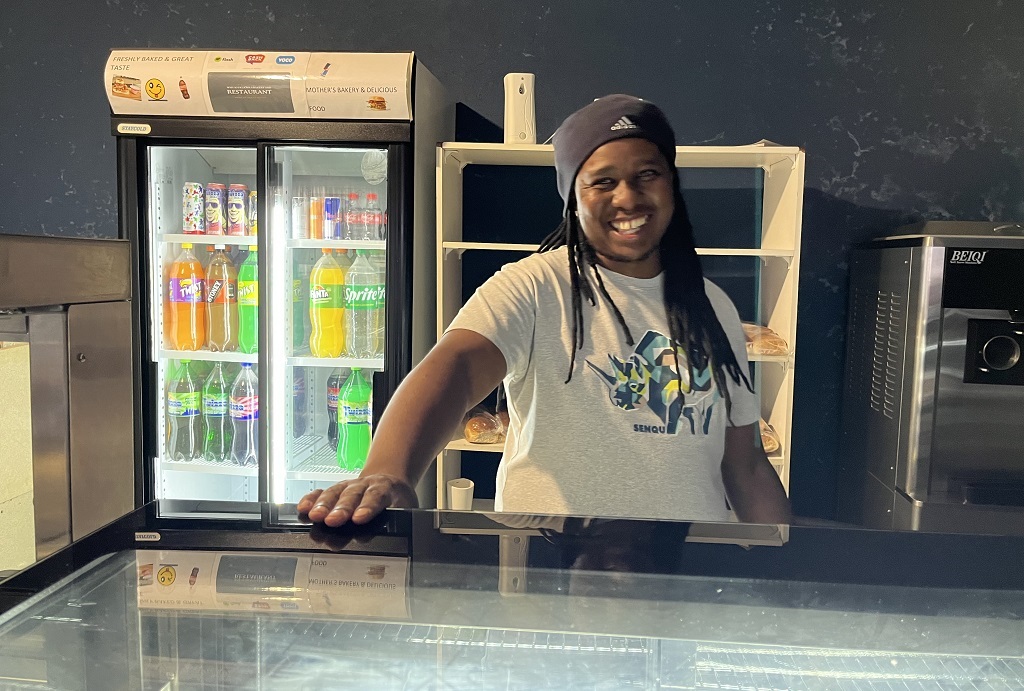
To make up for the gaps that donors can't provide, Y So Delicious, a bakery and restaurant, was established by Lukas Bukhali in 2007 to raise money. "This is part of our sustainability plan. We realised if we don't have a budget, we can't do other programmes. It is important to generate our own budget that we can control, so we can sustain our own programmes and administration," said Bukhali. The social enterprise is also providing a job opportunity for seven youths, who are paid the minimum wage of R3 500 per month.
News24 Lameez Omarjee
A sustainable future would be to implement more skills development programmes for residents to open their own businesses and earn incomes to be able to buy dignity packs. That way, Thusanang can also help others in need, said Bukhali.
This speaks to the size of the challenges that independent renewable energy projects generally have to respond to. They can't do everything on their own, which is why collaboration with different stakeholders is important.
Kruisvallei Hydro's approach of co-creating social-impact initiatives with the community has been received positively, and that's what makes them successful, said Mofokeng. Interventions are informed by a needs assessment and extensive consultations with a stakeholder engagement committee consisting of education, business, NGOs and local government representatives.
This is more constructive than investors imposing an intervention they think a community needs, said Mofokeng – who has seen his fair share of interventions gone wrong.
He recalled there being two parks established in Clarens as a social project. "One [park] does not have a single pole as we speak. And the other park, the land was donated to another creche because there was no way the park was going to survive," Mofokeng said.
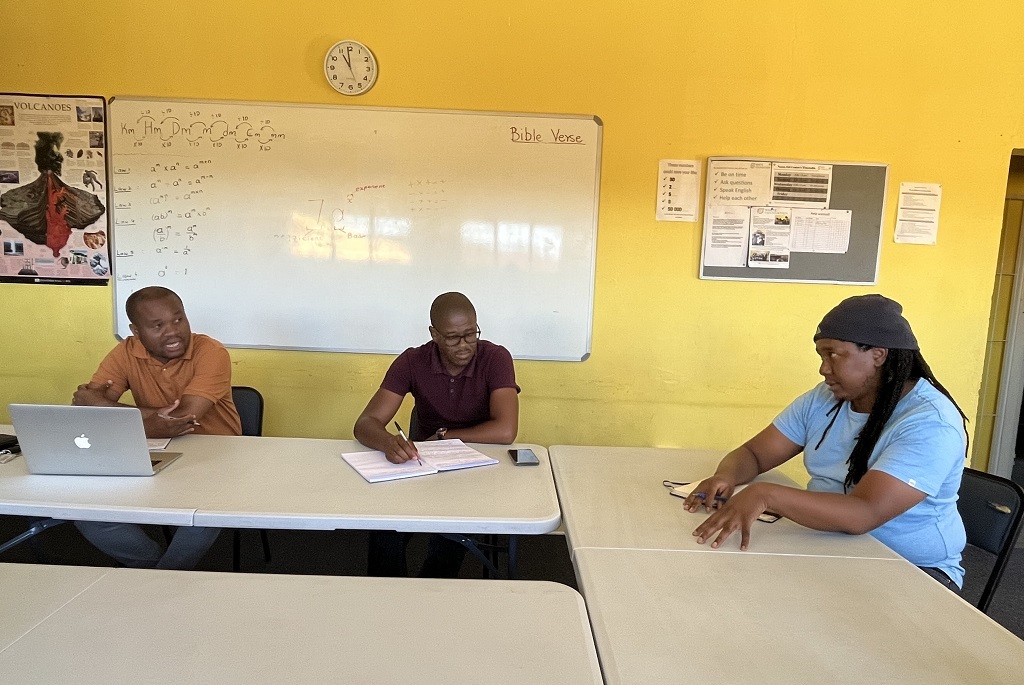
Instead of creating new initiatives, Kruisvallei Hydro plugged into existing social projects to scale their impacts on the Kgubetswana community. Regular consultation with stakeholders in the community also helps inform the direction the socio-economic development initiatives take.
News24 Lameez Omarjee
Co-creating solutions
This collaborative approach is taken up by other renewable energy projects in the REIPPPP, but this wasn't always the case. Stakeholder consultation is now written into the rules of the REIPPPP, explained Moyse.
Annually, renewable energy projects must submit economic development plans to the IPPO. This annual report must demonstrate that stakeholder engagement informed the different initiatives. There must also be evidence of a risk assessment of each initiative and an outline of the benefits.
Moyse admitted there are challenges. "One of the things that comes up regularly is that you can't satisfy everyone," he said. Limited budgets may result in some interventions being rolled over to the next year, which could be cause for conflict, he explained.
The IPPO monitors the progress made as projects have to submit quarterly reports. Site visits are conducted to verify the information – economic development independent monitors at the office annually audit the projects.
READ | Woman's passion for education now a legacy for a community to break the poverty cycle
But what happens to the socio-economic projects after a renewable energy plant is decommissioned?
Moyse, too has these concerns. "I always say, 'Give a man a fish, and he has food for a day. But teach a man to fish, and he has food for life,'" said Moyse. As part of their economic development plans, the renewable energy plants must also indicate how they are training people to sustain the various initiatives after the lifetime of the projects. "Sustainability is a factor that is the most important for us to ensure those initiatives are being sustained after the life of the project."
For Mofokeng, his hopes are that Kgubetswana will be a self-sustainable community that does not wait for a hand-out. That can be achieved by investing in initiatives that support employment growth and training or skills development. He believes narrowing the social ills in the community can only be done if people are "busy with something." "If people are idle and not doing anything, then we have social challenges," he added.
For now, Kruisvallei Hydro is stirring new ideas for the community about how the world can run on clean energy. "People were not aware that there are career paths in that type of field (renewable energy)," said Mofokeng. The electric scooter also echoes the message that clean energy companies exist, he added.
It's also changing the face of Clarens, to a "clean energy town."
*Red Rocket is the developer, EPC contractor, operations contractor, and asset manager, and shareholder for Kruisvallei Hydro.




 English (US)