
 3 years ago
1
3 years ago
1
ARTICLE AD BOX
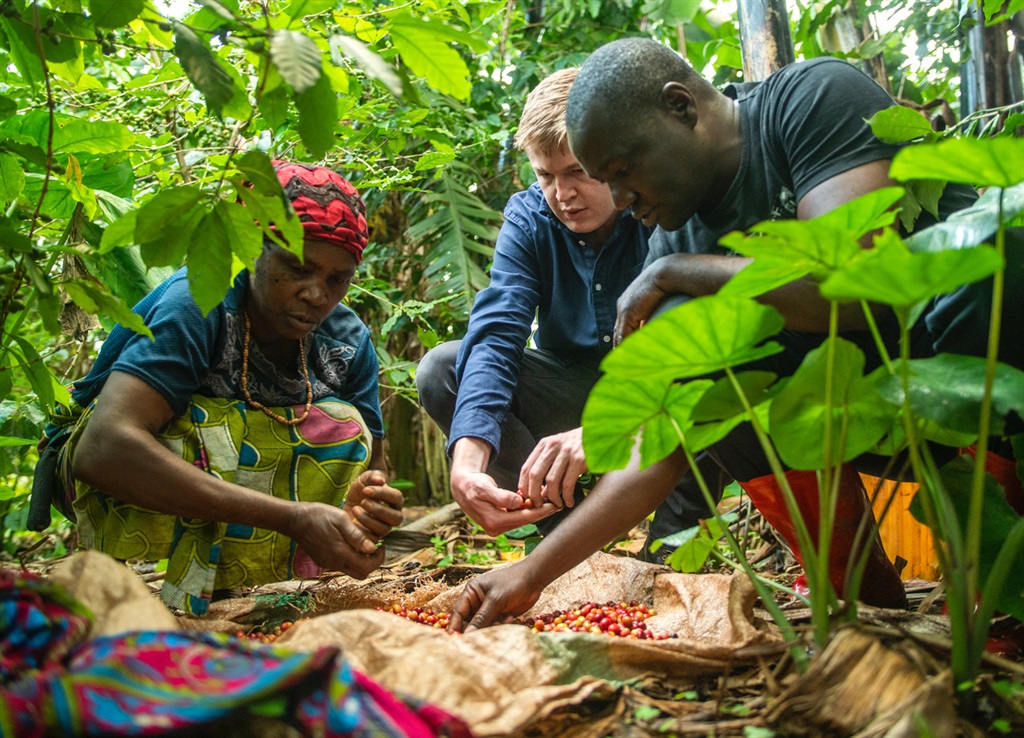
Stean Fasol inspects freshly picked coffee cherries with Rwandan smallholder farmers. (Supplied)
- Swahili-speaking South African Stean Fasol has introduced beans from Rwanda and Kenya to one of the world’s oldest coffee cultures.
- Fasol is working with smallholder farmers to reduce the amount of water they use and upgrade their equipment.
- Anaerobic fermentation trials have produced coffee with an alcoholic flavour that has been a hit in the Netherlands.
- For more stories, go to www.BusinessInsider.co.za.
A South African entrepreneur is adding flavour to one of the oldest and toughest coffee markets in the world, Amsterdam, with beans from African countries.
At the same time, Stean Fasol is helping small-scale coffee farmers in Rwanda and Kenya by developing a way for Dutch consumers to “tip” them digitally, and by modernising their equipment.
Stean’s Beans - the business Fasol started while studying business entrepreneurship in Amsterdam - is working with the East African farmers to drastically reduce the 150 litres of water they use to grow and process enough coffee to make a cup of espresso.
And Fasol, who was brought up in Kenya and speaks Swahili, is also doing trials with washing stations in East Africa to ferment coffee anaerobically, which creates a drink with a boozy flavour.
“I brought several bags to Amsterdam for high-end shops and regular customers loved it,” he says. “This year there has been a lot of interest with coffees that have a twist in the flavour.”
Fasol, 26, was entrepreneurial even while he was still at school in Cape Town, spending his spare time trading cellphones and laptops online. But when he matriculated in 2014, he knew his dyslexia and ADHD would make traditional academia difficult. “I’m not made for mainstream studies,” he says.
The business science course he found in the Netherlands was more practical, requiring students to set up and run businesses during their four years of study. Fasol decided on a coffee enterprise after interning with an East African coffee company then finding part-time work as a barista and in a roastery.
He wanted to understand all processes in the coffee supply chain, so he trained as an espresso machine technician and obtained expert certification from the Coffee Quality Institute.
Now it’s all systems go at his Amsterdam roastery, where he has just taken delivery of 19 tons of East African coffee, with more consignments on the way.
Fasol packs his roasted beans into recycled containers and uses three cargo bikes to deliver them to cafes throughout Amsterdam.
The city is one of the oldest coffee-drinking cities in the world thanks to Dutch East India Company vessels which arrived in the 17th century with beans from Ethiopia and Indonesia.
Most 21st-century coffee comes from giant plantations in Brazil, Vietnam and Colombia but Fasol’s is cultivated by small East African growers who generally farm less than 2.5ha.
Many of them don’t even have ID documents and deal solely in cash, making it impossible for them to build up a credit history, obtain a loan to upgrade their 1960s equipment or buy insurance.
With Fasol’s help, 400 Rwandan farmers have opened bank accounts. This means he can pay them digitally, but he has a bigger idea to overcome the lack of connection between European consumers and the smallholder African producers.
“The Dutch use an online payment app called Tikkie for nearly everything,” he says. “I’m working on something called ‘Tikkie the Farmer’ for coffee shops. If customers like the coffee, they’ll be able to add a small tip that goes back to the smallholder farmers.”
Fasol’s dream of “water-free coffee” grew out of his regular visits to washing stations in Rwanda, where skin and pulp is washed off freshly harvested coffee cherries before the sticky, sweet layer of mucilage on the bean is removed through fermentation in a tank of water.
Vast quantities of water loaded with carbon and acid often find their way into rivers and underground water as a result of this process, which is why Fasol persuaded the Dutch government to provide grants and interest-free loans to equip farmers for the more time-consuming and labour-intensive alternative of dry processing.
The coffee cherries go onto drying tables immediately after harvesting and stay there for six weeks, with regular turning and raking to prevent rotting, then all the layers surrounding the bean are removed together.
Fasol is also experimenting with anaerobic fermentation, and persuaded a washing station owner in Rwanda to seal one of his fermentation tanks for 48 hours so oxygen couldn’t get in.
The “very fruity and alcoholic flavour” in the roasted beans has been a niche hit in Amsterdam. “This is where I see the coffee industry going,” says Fasol. “If we produce something unique and add value, we’ll be able to charge more and the farmers will earn more.”
In the meantime, though, he’s started buying more than the 40% of the Rwandan farmers’ crop that is A-grade coffee. “The next 20% is B-grade, and it’s found its own niche in Amsterdam because it’s less expensive,” he says.
Uganda is the next country Fasol plans to add to his stable, but he’s already working on another mission: to get East Africans to drink the coffee they grow so that it becomes more than just another crop.
“Everyone in Rwanda drinks tea,” he says. “Many of the smallholder farmers have never even sampled their own coffee beans.”





 English (US)